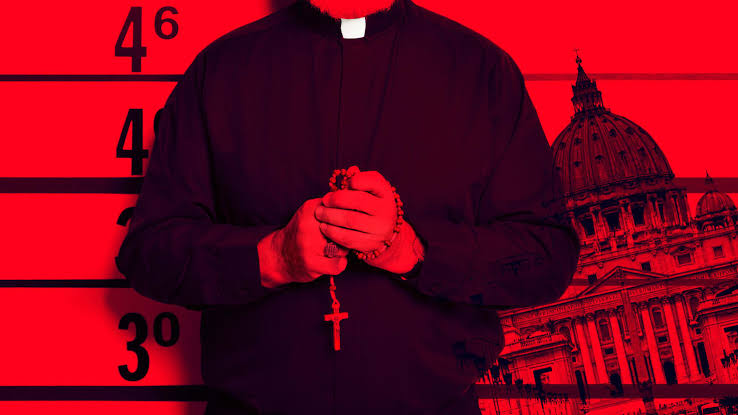
Berry and a Hartford Courant correspondent authored a front-page plot in early 1997 that exposed Maciel’s nearly a decade of child molestation, disclosing that nine men had come forward to accuse him of sexually assaulting them as boys or young men training to be religious leaders.
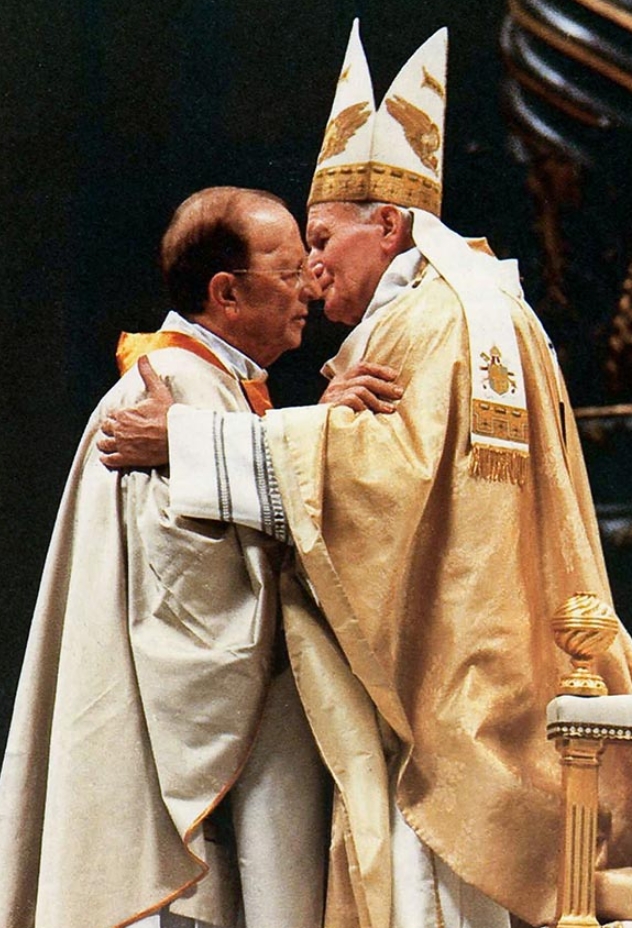
After years of being afflicted by accusations against the Legion’s founding father, the Vatican probed approximately 100 abuse claims against Maciel and omitted him from ministry. The Vatican had already excluded Marciel due to his sexual and lewd actions, which breaks the Vatican law.
According to the International Consortium of Investigative Journalism (ICIJ):
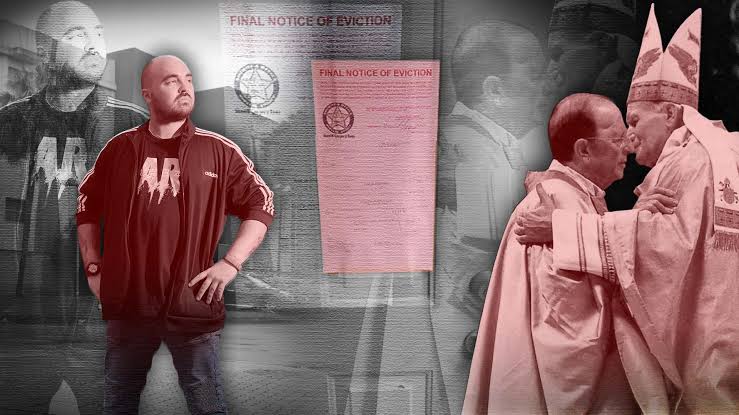
The Vatican did not directly respond to questions about the trusts, but said that its effort to reform the Legion was mostly focused on issues around its founder and its structure.
During its investigation, the Vatican appeared to be operating on the belief that the Legion was low on money. The Vatican overseer of the Legion, Cardinal Valasio De Paolis, wrote in September 2011 that the Legion’s financial situation was “serious and challenging” and that some victims were asking for “enormous sums that the Legion absolutely cannot afford,” according to a 2014 book by Italian journalist Gianluigi Nuzzi based on leaked Vatican sex abuse records.
The Vatican declared that it would assume charge of the Legion’s operational processes, marking the church’s most serious action against such a Catholic order during the worldwide sex abuse. The Vatican would investigate the Legion’s financial affairs and potential sex crimes, and set up a committee to accommodate survivors; financially and physically.
“Garza was himself alleged of sexual misconduct in a 2016 suit that intrigued press coverage, but it was withdrawn in 2019. Garza “vehemently denies his participation in this or any abusive behaviour,” according to a Legion spokesman at the time, and the Legion’s own internal review cleared him. Defense attorneys for the victim told L’Espresso, an ICIJ partner in Italy, in May that they are looking into ways to refile the lawsuit.”
International Consortium of Investigative Journalism (ICIJ)
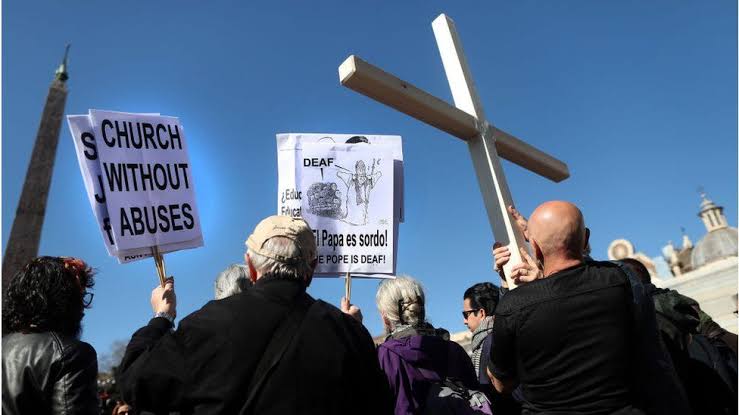
While thousands of children were sexually and vulgarly mistreated, physically abused, and psychological trauma was sanctioned on youngsters who were sexually molested by religious leaders. And, while kids were being sexually molested, the Pope stayed quiet. The pope did not criticize these religious leaders, and the Pope did not oppose the behavior of numerous religious leaders who perpetrated sexual molestation and harassment.
“In February 15, 2019, the Roman Catholic Church of Brooklyn labeled over 100 bishops who were caught red-handed of sexually molesting a child. It was one of the most comprehensive revelations yet in an overflow of records newly released by the christian community as its handling of the problem has attracted the attention of law enforcement authorities.”
The New York Times.
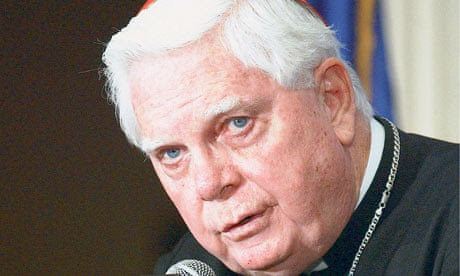
“At the time, sexual abuse of minors by Roman Catholic clerics was not a widespread topic of discussion, in the US or anywhere else. Cases would surface, and sometimes be quite extensively reported: in 1981, Father Donald Roemer pleaded guilty to child molestation in Los Angeles; in 1985, a Louisiana priest, Gilbert Gauthe, was convicted of similar offences against 11 boys. But they were seen, for the most part, as isolated incidents. There was no convincing evidence of any consistent pattern of clerical abuse, still less of a sustained attempt by the church to cover up such behaviour – by simply moving priests on without informing the authorities.
Cardinal Law’s seemingly innocent court filing, though, was about to change that. Buried somewhere in it was the admission that when, in 1984, he had assigned Geoghan to St Julia’s church in the Boston suburb of Weston, he had done so knowing that the priest had, in his previous parish, been accused of molesting seven boys from the same family.” — Boston Globe & The Guardian.
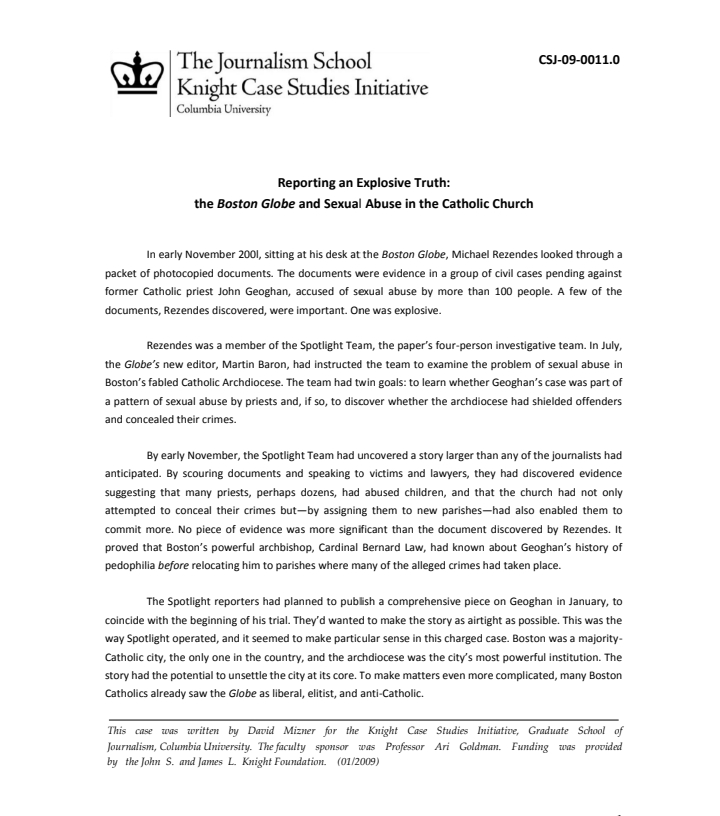
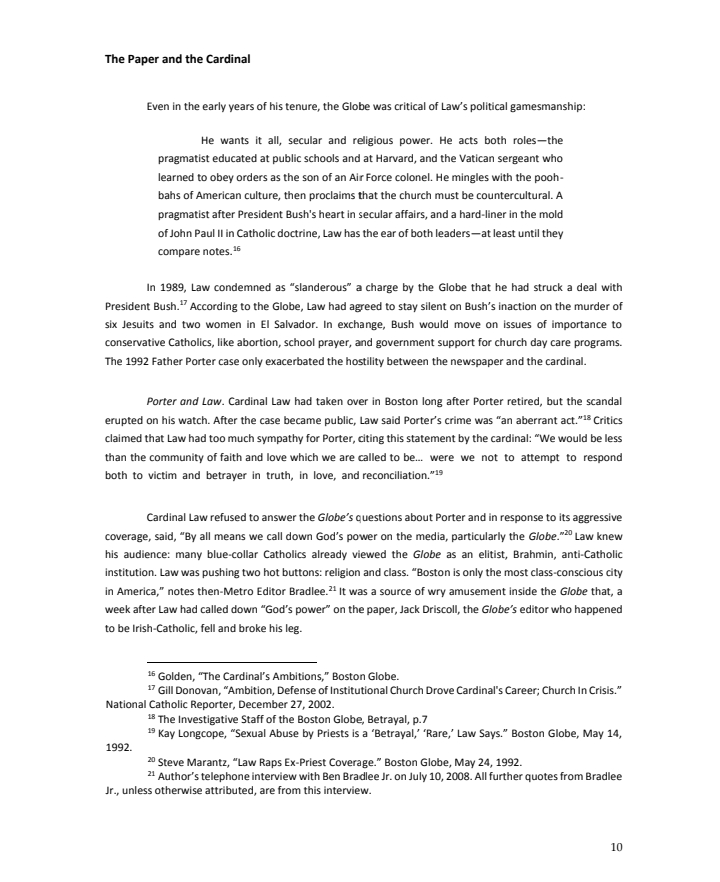
“In 1989, Law condemned as “slanderous” a charge by the Globe that he had struck a deal with President Bush.¹⁷ According to the Globe, Law had agreed to stay silent on Bush’s inaction on the murder of six Jesuits and two women in El Salvador. In exchange, Bush would move on issues of importance to Conservative catholics, like abortion, school prayer, and government support for church daycare programs. The 1992 Father Porter case only exacerbated the hostility between the newspaper and the cardinal.”
The Journalism School Knight Case Studies Initiative. The Paper and the Cardinal, Page no. 10.
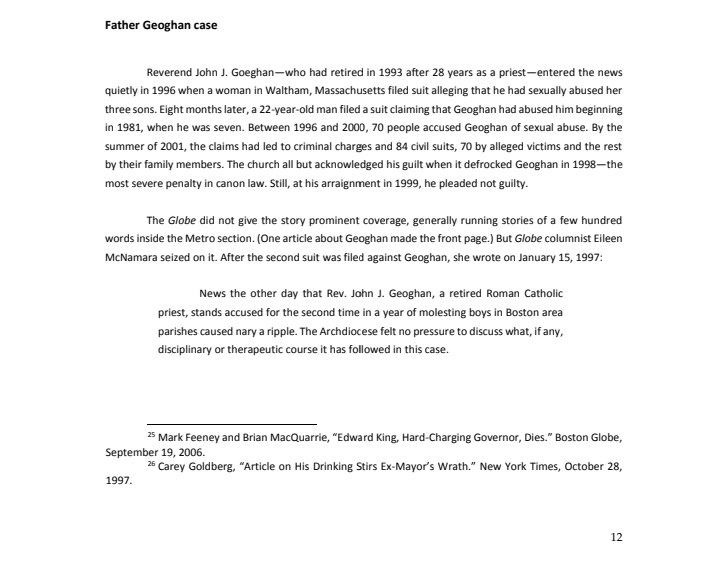
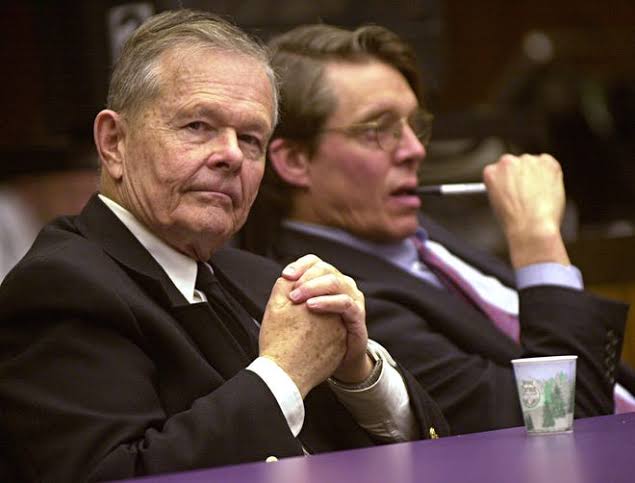
Reverend Jhon J. Geoghan — who had retired in 1993 after 28 years as a priest — entered the news quietly in 1996 when a woman in Waltham, Massachusetts filed suit alleging that he had sexually abused her three sons. Eight months later, a 22 year-old man filed a suit claiming that Geoghan had abused him beginning in 1981, when he was seven. Between 1996 to 2000, 70 people accused Geoghan of sexual abuse. By the summer of 2001, the claims had led to criminal charges and 84 civil suits, 70 alleged victims and the rest by their family members. The church all but acknowledged his guilt when it defrocked Geoghan in 1998 — the most severe penalty in canon law. Still, at his arraignment in 1999, he pleaded not guilty.
I think we all had a sense, even before our first story came out, that this was an explosive subject with huge potential impact,” says Michael Paulson, the paper’s former religious affairs correspondent, who helped the paper to win the 2003 Pulitzer prize for exposing both the full extent of sexual abuse by Boston Catholic clergy, and the shameful response to it of Cardinal Law and his bishops. “But I think we were still all taken aback by how quickly and dramatically it exploded – first here, then across the country and around the world.”
The Guardian.
Pope Francis informed the Legion that the action had been tarnished by the personality cult covering its creator, and that the application had not been fully reformed even after a decade of increased Vatican constant monitoring.
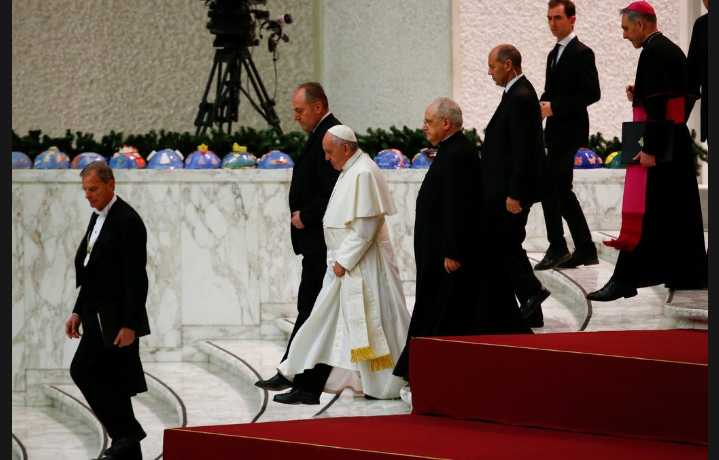
The church, one of Rome’s four great ancient basilicas, is where Cardinal Law had the honor of serving for more than a decade, first in 2004 as archpriest and, after his retirement in 2011, as archpriest emeritus. Those positions followed his resignation in disgrace as archbishop of Boston in 2002 amid revelations that he had systematically covered up the rampant sexual abuse of minors.
For many, Cardinal Law became the face of a complicit church hierarchy that hid and enabled sexual abuse, a scandal that has had a lasting impact on the credibility of the Roman Catholic Church in the United States. — The New York Times.
 FM Quezon Academic Blog
Leave a comment